
Key takeaways
- A HealthEquity survey of 800+ benefits leaders found that more than 70% believe Artificial Intelligence (AI) will have a positive impact on benefits administration, though most are still in the early stages of understanding it.
- Benefits leaders see the biggest opportunities in health plan recommendations and improving member access to care, with goals of saving time and enhancing employee wellbeing.
- Data security and accuracy are the top concerns holding benefits leaders back, along with a desire to preserve the human touch in employee interactions.
- Optimism grows with knowledge: among leaders who consider themselves highly knowledgeable about AI, 92% expect a positive impact and 85% say they’d prioritize an AI-enabled benefits partner.
The integration of artificial intelligence (AI) into modern life has caused a great deal of speculation over its potential application in healthcare. With a large amount of data and complex decision making, the healthcare field seems primed for AI assistance, and that includes employee benefits.
But a survey from HealthEquity reveals that while AI presents exciting possibilities, top benefits leaders have more learning to do before they feel comfortable implementing it in their work.
The survey asked more than 800 benefits leaders across the country and in a variety of industries to share their view of AI. Their answers reveal the current state of AI in benefits, as well as a fascinating look ahead into how these technologies could transform employee benefits for both employers and their people.
Why is AI is still new to benefits administration?
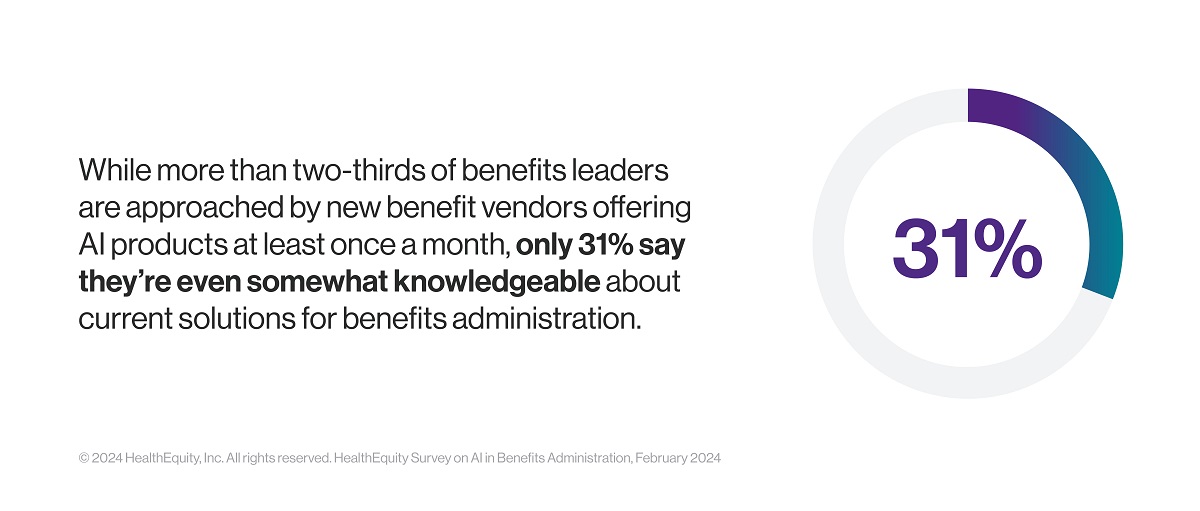
According to the HealthEquity survey, benefits leaders are being approached by vendors offering AI solutions, but only somewhat frequently.
How often do benefits leaders hear about AI solutions from vendors?
-
How often benefits leaders hear about AI solutions from vendors
- 68% hear about AI products at least once a month
- 32% hear about AI products less often
-
How confident benefits leaders feel in their AI knowledge
- 4% strongly agree they’re knowledgeable about current AI solutions
- 23% neither agree nor disagree
Benefits leaders are similarly neutral on their interest in partnering with vendors that use AI. When asked if they were likely to choose a benefits partner incorporating AI into their solutions, a full 46% said they neither agreed nor disagreed. Only 10% strongly agreed, though 36% said they agreed somewhat and only 1% strongly disagreed.
Are benefits leaders optimistic about AI?
Although the use of AI in benefits administration is still emerging, top benefits leaders seem cautiously optimistic about its potential.
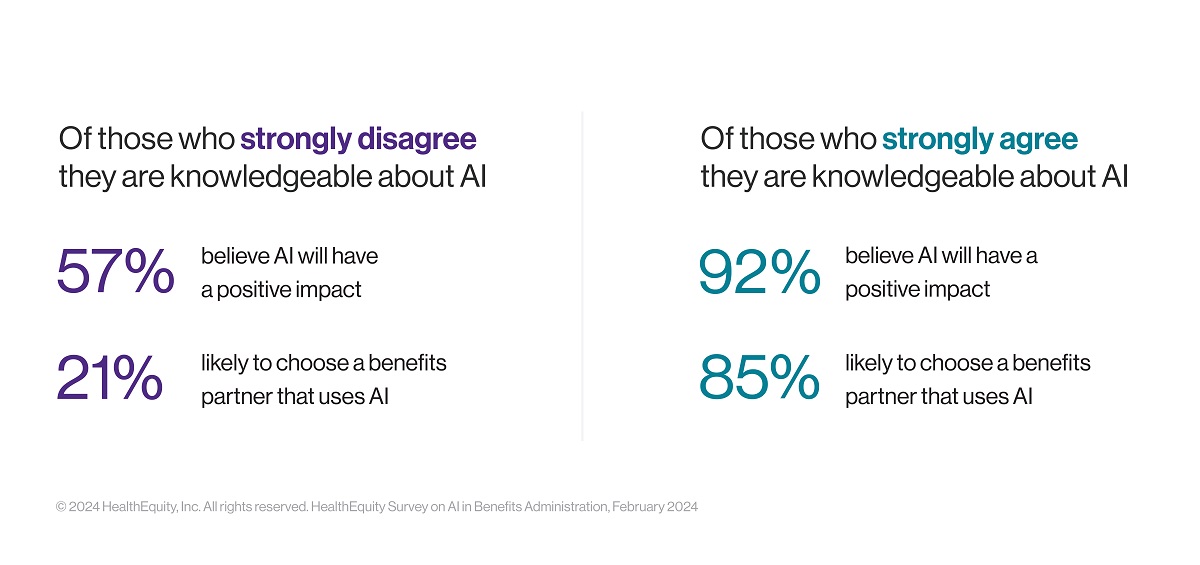
More than 70% of survey respondents say they believe AI will have a positive impact on benefits administration, with only 6% indicating disagreement. Even among respondents who say they have relatively low knowledge on AI, the majority believe AI will have a positive impact on the industry.
That positive sentiment only increases as benefits leaders learn more about AI. Among those who strongly agree they’re knowledgeable about AI, 92% believe AI will have a positive impact. And 85% say they’re likely to choose a benefits partner that uses AI.
What are the biggest opportunities for AI in employee benefits?
The reason behind the industry’s AI optimism lies in its potential utility for both benefits leaders and the employees they serve.
When asked to rank possible opportunities for the use of AI in benefits, survey respondents expressed positivity across a wide variety of areas. The recommendation of health plans and improvement of member access to care ranked particularly highly.
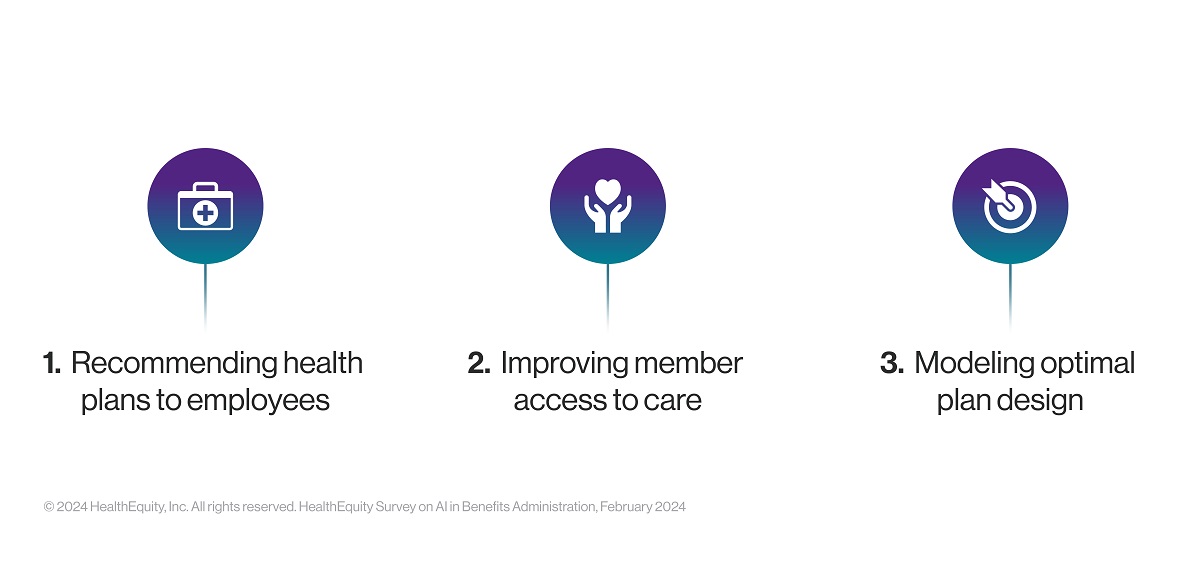
These responses echo sentiments in the larger healthcare community. A number of AI startups are targeting health plan selection as a prime opportunity for artificial intelligence, which could potentially reduce the number of employees who avoid shopping for healthcare by remaining in their preexisting, and potentially less optimal, plan.
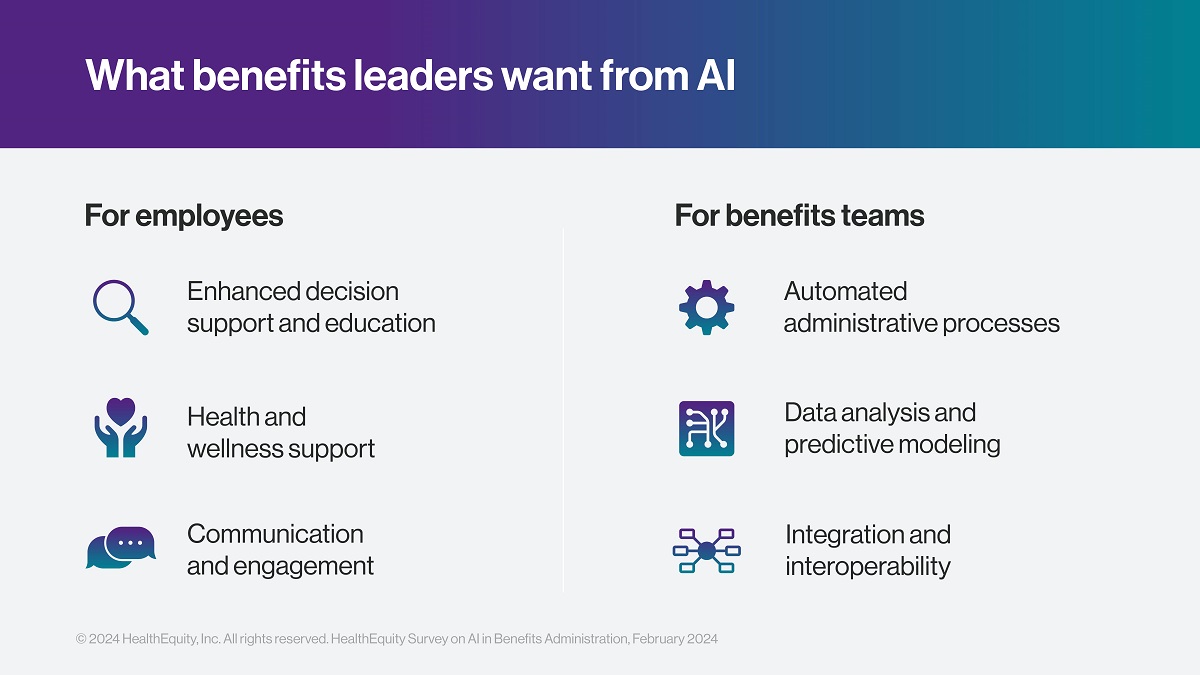
Benefits leaders also feel AI outcomes could align with their larger benefits goals. When asked why they would choose a benefits partner with AI solutions, survey respondents said improving benefits’ effectiveness, saving time, and improving employee wellbeing were their primary motivations.
Overall, benefits leaders are eager for solutions that both streamline the administrative process and personalize, and improve, the employee experience.
Data security and accuracy lead benefits leaders’ concerns
“Is it really accurate? We’ve seen AI in practice, and it can be frustrating how wrong it can be when asked a question.” -Survey respondent
While benefits leaders are optimistic about the potential of AI, that optimism is a cautious one.
What concerns are holding benefits leaders back?
- Data security: Leaders want confidence that employee information stays protected.
- Accuracy and reliability: Leaders worry AI can deliver incorrect or inconsistent answers.
- Employee experience: Leaders want benefits interactions to feel simple and dependable.
- Human touch: Leaders don’t want technology to replace the empathy and guidance employees still need.
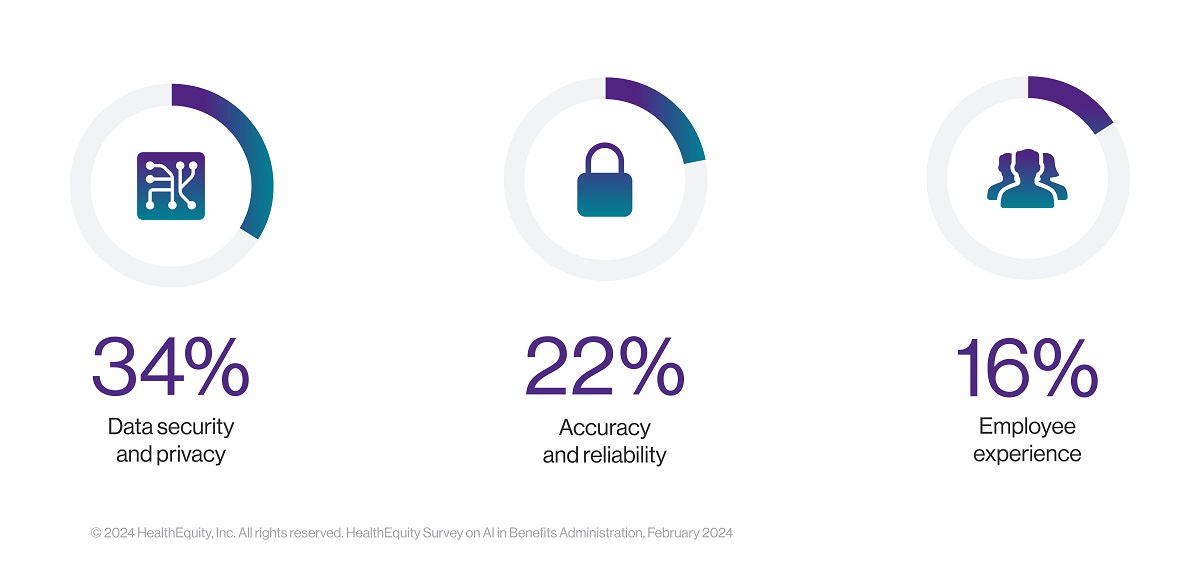
When asked about these concerns specifically, benefits leaders stressed that they prioritize employees’ ability to interact with benefits in a secure, reliable, and simple way. With AI largely new, they want greater confidence in its ability to deliver these outcomes.
“How can AI determine the difference between ‘cost effective’ and ‘best choice’ for the participant?” -Survey respondent
What is the future of AI in benefits administration?
We are still witnessing the early stages of AI’s entry into the employee benefits space. As AI continues to integrate into the larger healthcare industry, however, benefits leaders look forward to the improvement of the employee benefits experience through AI.
Though concerns remain, many leaders are hearing more about current AI solutions and updating their vision of what AI could do for their teams and their employees. If concerns on data security and reliability are heeded, benefits teams could see more efficient work processes while the employees they serve could enjoy more personalized services that improve their health and wellness.
“From healthcare affordability to benefits cost savings, AI can be harnessed to model both future challenges for employees but also positive potential future impact if recommended steps are taken,” said Shuki Licht, VP Head of Innovation for HealthEquity.
Frequently asked questions
References and disclosures
HealthEquity does not provide legal, tax or financial advice.