
Key takeaways:
- The 2025 Health Savings Account (HSA) contribution limits increased to $4,300 for individuals and $8,550 for families, with employer contributions counting toward these totals.
- The telehealth safe harbor relief expired for plan years beginning on or after January 1, 2025, meaning high-deductible health plans (HDHPs) can no longer cover telehealth services before the deductible is met without affecting HSA eligibility.
- The IRS expanded preventive care coverage for HDHPs in 2025, now including over-the-counter contraceptives, breast cancer screenings, continuous glucose monitors, and certain insulin products.
- Proposed HOPE accounts could broaden healthcare savings access to all Affordable Care Act (ACA) qualified plan holders, not just those enrolled in an HDHP, with portable, tax-free benefits for both employers and employees.
Navigating the world of regulations can feel like solving a giant, ever-changing puzzle—especially for businesses striving to stay compliant. During our recent regulatory update webinar, we discussed several regulatory and legislative updates businesses need to know about to prepare for the year ahead. We were able to answer many of the questions benefits leaders are asking right now. Spoiler alert: you’re not alone in feeling overwhelmed by the complexity of regulatory compliance!
If you weren’t able to make it to the webinar, we’ve rounded up the top questions and answers from the event. From deciphering new rules to understanding how changes might impact your organization, these are the insights you need to stay ahead of the curve.
What are the 2025 HSA contribution limits, and how do employer contributions affect employees?
See up-to-date Health Savings Account (HSA) contribution limits here.
For 2025, HSA contribution limits increased to $4,300 for self-only coverage and $8,550 for family coverage. If an employee is age 55 or older, they can still add a $1,000 catch-up contribution.
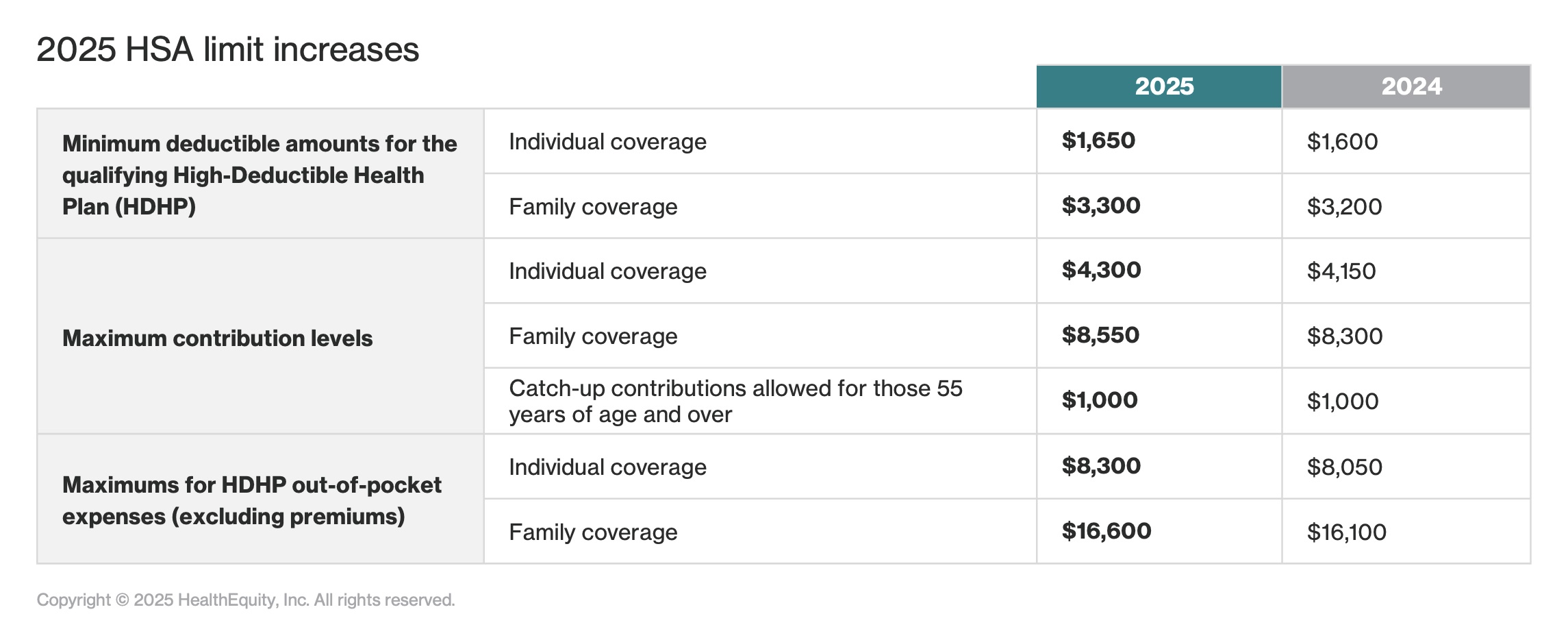
Employer contributions count toward those IRS limits. That means if you contribute to employee HSAs, employees should reduce their own payroll contributions so their combined total doesn’t exceed the annual maximum.
Action you can take: Make sure your enrollment materials make it easy for employees to calculate total contributions and make updates as needed.
What are HOPE accounts, and how could they impact employers?
The Health Out-of-Pocket Expense (HOPE) Act is a bipartisan plan proposed to Congress that would create savings accounts designed to help employees manage their healthcare expenses. HR 9394 would create HOPE accounts, enabling all Americans with Affordable Care Act (ACA) qualified insurance—especially middle- and lower-income individuals—to save for out-of-pocket healthcare costs without a high-deductible health plan (HDHP). Overall, HOPE accounts would include the following features:
-
Portable. Funds would follow employees if they change jobs.
-
Accessible. Available to anyone with an ACA-qualified health plan and no requirement to enroll in an HDHP.
-
Tax-free growth. Funds in the HOPE account (and any investments) would grow without incurring tax.
As a tax-advantaged account, HOPE accounts aim to encourage individuals to save for medical expenses, take proactive steps to maintain their health, and make informed decisions about their care. These accounts would be funded by both employers and employees, offering a tax-advantaged way to build a reserve for healthcare needs without the need to be enrolled in an HDHP.
Potential employer impacts of HOPE accounts
| Potential impact | What it could mean for employers |
|---|---|
| Talent attraction and retention | HOPE accounts may serve as a compelling benefit for recruiting and keeping employees who value stronger healthcare support. |
| Cost and health outcomes | By encouraging preventive care and healthier choices, HOPE accounts could help reduce healthcare costs over time for employers and employees. |
| Administration and rollout effort | Implementation may require administrative adjustments, upfront investment, and employee education to drive effective use. |
Action you can take: If you’re monitoring future plan design options, add HOPE accounts to your “watch list” and start mapping where they’d fit alongside HSAs, Flexible Spending Accounts (FSAs), and Health Reimbursement Arrangements (HRAs) if legislation advances.
How can you communicate HSA tips when your plan year doesn’t match the calendar year?
HSAs run on calendar-year IRS limits, even when your medical plan year starts mid-year. That mismatch can confuse employees, especially during off-cycle enrollment or plan changes. Use a simple, repeatable cadence:
-
Explain the difference between the plan year and the calendar-year IRS limits.
-
Remind employees to check their HSA balance and contribution pace regularly.
-
Share key contribution and reimbursement deadlines.
-
Offer examples of qualified medical expenses to make the benefit feel real and usable.
-
Provide ongoing touchpoints, like mid-year reminders, short webinars, or an FAQ.
Does the telehealth safe harbor expiration apply only to HDHP-related programs?
The telehealth safe harbor relief originally allowed certain HDHPs to cover telehealth services pre-deductible without jeopardizing HSA eligibility. That relief expired for plan years beginning on or after January 1, 2025, which can affect HSA compatibility if a plan still provides low-cost or no-cost telehealth before the deductible.
If you offer telehealth outside the HDHP structure, confirm details with your plan sponsor or carrier so you can message accurately.
Action you can take: Review your telehealth benefit design now, then align it with HSA eligibility rules before you finalize plan documents and employee communications.
How will the telehealth changes affect employees enrolled in an HDHP?
If an HDHP continues to offer no-cost telehealth before the deductible, employees may lose eligibility to contribute to an HSA for plan years beginning on or after January 1, 2025. Plan sponsors should confirm their HDHP design complies with current rules so employees can confidently keep contributing.
Action you can take: Add an HSA-eligibility check to your renewal checklist, specifically for telehealth cost-sharing.
Why does the IRS release some benefit limits at different times?
The IRS indexes some limits on different measurement periods. For example, healthcare Flexible Spending Account (FSA) and transportation limits use a 12-month period ending in August, which is why those updates often come later than HSA limit announcements.
Action you can take: Build a benefits “update calendar” so you can plan communications around when limits typically publish, instead of scrambling when guidance drops.
What preventive care expenses can an HDHP cover?
HDHPs typically cover preventive care, like annual exams, immunizations, and screenings, without requiring members to meet the deductible. Coverage varies by plan, so employees should verify specifics.
In 2025, the IRS expanded what is considered preventive care for HDHPs, including:
-
Over-the-counter (OTC) oral contraceptives: Now covered, including emergency contraceptives and male condoms.
-
Breast cancer screening: Extended to individuals not yet diagnosed with breast cancer, emphasizing early detection and prevention.
-
Continuous glucose monitors: Available for those diagnosed with diabetes, highlighting ongoing care and management.
-
Insulin products safe harbor: Provides coverage for certain insulin products regardless of whether insulin is prescribed for diabetes treatment or for prevention of complications, such as the exacerbation of diabetes or the development of a secondary condition.
Action you can take: Partner with your carrier and communications team to translate these updates into a short “what’s covered” explainer employees can actually use.
Does the preventive care expansion begin January 1st or the company plan year?
The Preventive Care Expansion begins based on the company’s plan year, not January 1. This means the changes will take effect at the start of your organization’s next plan year, as outlined in your health benefits agreement.
If your company’s plan year aligns with the calendar year, the expansion will begin on January. However, if the plan year starts at a different time, such as July 1, the changes will take effect on that date instead. Be sure to review your specific plan details to confirm the timing.
How can you stay updated on benefits policy and regulatory changes?
A good place to get all the information you need about recent and upcoming regulatory changes is right here, on the Remark blog. Our Regulatory Updates section covers important legislative updates that could affect your benefits, so subscribe today to stay current on industry news.
Frequently asked questions
References and disclosures
HealthEquity does not provide legal, tax, financial, or medical advice.